
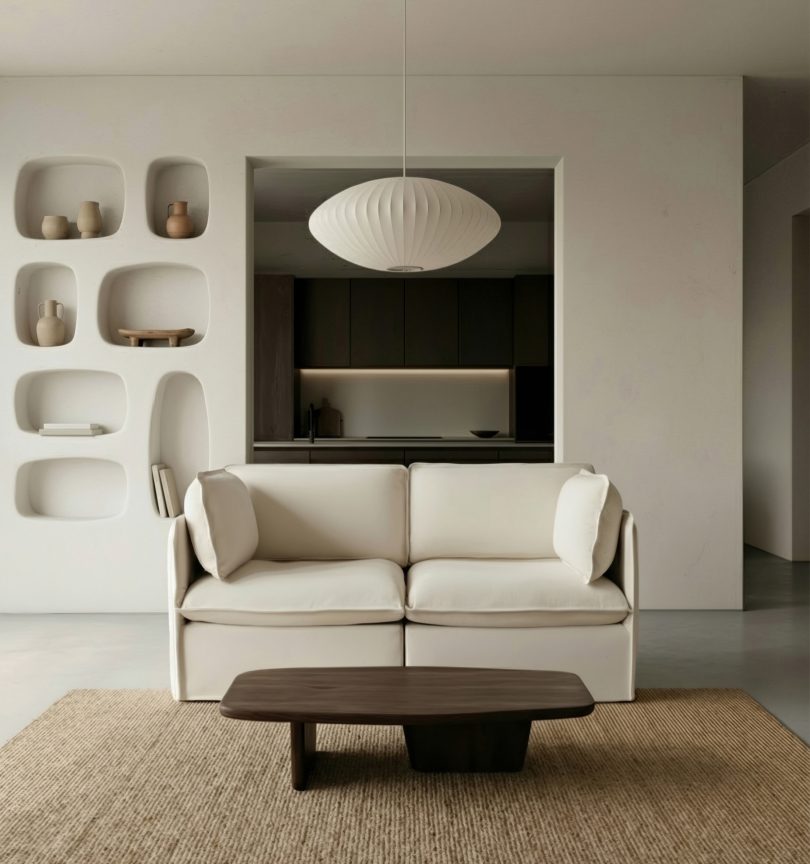

Fabric selection is where most sofa purchases go wrong. Buyers choose based on color, texture, and appearance in a showroom or product photo, and those qualities tell almost nothing about how the material will hold up under daily household use. A fabric that photographs beautifully can pill, absorb odors, trap pet hair, or stain permanently within the first year of regular use. Anabei approached upholstery selection from the opposite direction, starting with performance requirements and working backward to aesthetics.
Anabei is a direct-to-consumer furniture brand developed under CABA Design, with a product lineup built around sofa systems that combine modular configurations, powder-coated steel frames, and fully removable and machine-washable covers. With modular washable sofa configurations available from $699, the brand’s fabric choices are not decorative decisions layered onto an existing product. They are integrated into the design system from the ground up, selected and engineered to meet the demands of households where furniture gets used heavily every day.
The Gap Between Stain Resistance and Actual Cleanability
Most furniture brands offer stain-resistant fabric as either a standard feature or an upgrade. The term covers a wide range of treatments and constructions, and buyers rarely have enough information to evaluate what it means in practice. In many cases, stain resistance refers to a surface coating applied after the fabric is woven, a treatment that can degrade with cleaning, friction, and time.
The practical consequence is that a sofa marketed as stain-resistant may perform well early on and noticeably less well later. Spills that initially beaded off the surface can begin to absorb. The treatment cannot typically be reapplied at home, and professional reapplication is not widely available. Buyers who purchased based on the stain-resistance claim may find themselves managing a fabric that no longer behaves the way it did when new.
Anabei’s approach draws a clear line between surface treatment and engineered fabric performance. The upholstery used across the brand’s lineup is selected for its resistance to liquids and stains, with performance tied to the material rather than treated as an afterthought. That distinction matters because it helps determine whether the fabric’s performance can hold up across regular use.
The washable cover system reinforces this. When a fabric is both engineered for stain resistance and fully removable for machine washing, the two properties work together. Resistance slows absorption in the moment. Washability gives owners a way to refresh the fabric over time. The result is a fabric system designed to be maintained rather than simply endured.
Pet-Specific Fabric Considerations
Anabei’s fabric options include selections suited to households with pets. Pet ownership introduces a specific set of upholstery challenges that general stain resistance does not fully address: claw contact, fur accumulation, dander, and occasional accidents each place different demands on a fabric.
Fabrics that resist claw snags require a tight, dense weave construction. Fabrics that release pet hair more easily require a smoother surface with lower static retention. Fabrics that handle liquid accidents require both liquid resistance and washability. Anabei performance fabrics are selected with these practical household requirements in mind rather than positioned as a general-purpose upgrade.
How Fabric Performance Connects to Long-Term Value
A sofa’s fabric has more influence on its practical lifespan than almost any other component. Frames can last for years. Cushion cores can be replaced. But a fabric that has degraded beyond effective cleaning can shorten the useful life of the sofa, regardless of the condition of everything beneath it. For buyers making a considered purchase decision, fabric durability is a financial question as much as an aesthetic one.
Anabei furniture addresses this by treating the covers as a replaceable and maintainable component rather than a permanent surface. Because the covers are removable, they can be washed on a regular schedule rather than only when a visible problem requires attention. Regular maintenance can help reduce the gradual accumulation of oils, dust, and residue that degrades upholstery even without visible staining.
That is where the Anabei machine-washable cover system becomes especially relevant. It connects fabric performance with ownership practicality. The upholstery is not expected to resist every household condition forever without care. It is designed to be cared for in a way that supports longer use.
Aesthetics Without Compromise
Performance fabric carries a reputation, sometimes deserved, for looking institutional. The materials that hold up best in commercial settings, such as waiting rooms, airports, and hospitality environments, have historically prioritized durability over tactile quality and visual appeal. Residential buyers have often faced a trade-off between a fabric that looks and feels the way they want and a fabric that performs the way they need.
Anabei has built its lineup around closing that gap. The brand’s fabric options are designed to meet residential aesthetic expectations while delivering performance specifications associated with daily household use. The selection process starts with performance requirements, but the end products are designed for living rooms, not lobbies.
The Anabei sofa system reflects that broader design logic. Fabric, frame, washability, and modularity are not separate selling points. They are connected parts of a product built for real ownership conditions: pets, children, spills, movement, rearrangement, and daily use.
About Anabei
Anabei is a direct-to-consumer furniture brand developed under CABA Design, specializing in modular sofa systems with performance upholstery and fully removable, machine-washable covers. The brand’s fabric lineup includes pet-friendly and family-focused options engineered for long-term daily use, supported by powder-coated steel frame construction and a direct-to-consumer pricing model. Learn more about Anabei and its approach to washable, modular furniture.